

Technical Aspects of the Chenab Railway Bridge
Geotechnical and Structural Engineering Perspectives
The Chenab Railway Bridge is a landmark achievement in Indian civil engineering and one of the most challenging bridge projects ever executed. Located in the seismic, mountainous terrain of Jammu & Kashmir, this bridge demanded extraordinary geotechnical solutions and advanced structural engineering innovations to ensure safety, durability, and serviceability under extreme conditions.
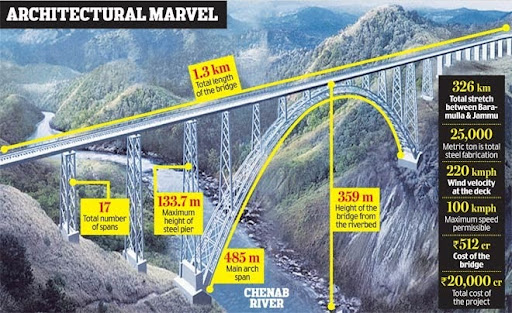
At a height of ~359 m above the Chenab River, it is the world’s highest railway bridge, forming a critical link in the Udhampur–Srinagar–Baramulla Rail Link (USBRL) project.
Project Overview (Engineering Context)
| Parameter | Value |
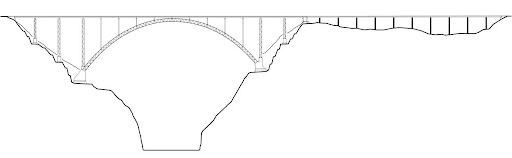
| Bridge type | Steel arch bridge |
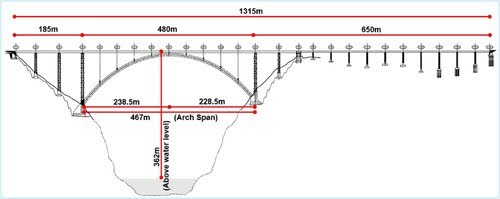
| Total length | ~1,315 m |
| Main arch span | ~467 m |
| Height above river | ~359 m |
| Design life | 120 years |
| Seismic zone | Zone V (very high seismicity) |
| Wind speed considered | > 260 km/h |
PART A — GEOTECHNICAL ASPECTS

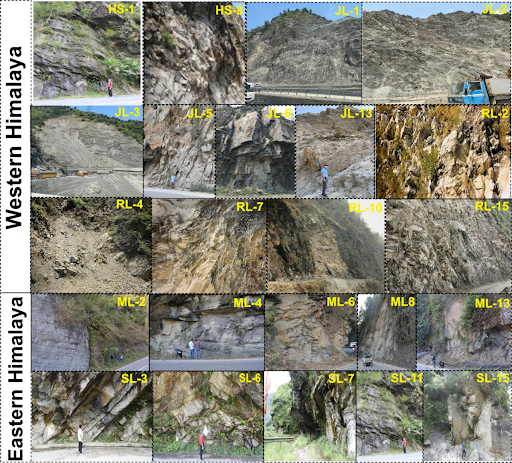
Geological & Geotechnical Challenges
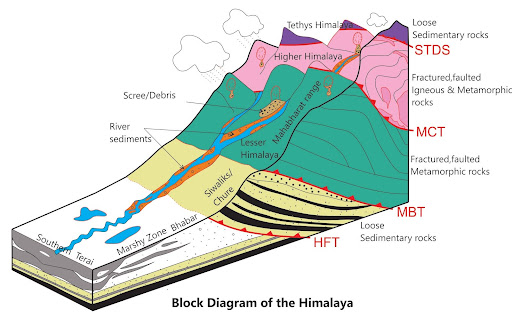
2.1 Geological Setting
- Located in the young Himalayan fold belt
- Rock types encountered:
- Quartzite
- Phyllite
- Schist
- Weathered sedimentary formations
- Presence of:
- Fault zones
- Shear planes
- Jointed and fractured rock masses
➡️ Major concern: Highly heterogeneous rock mass with variable RQD and GSI values.
Foundation System Design
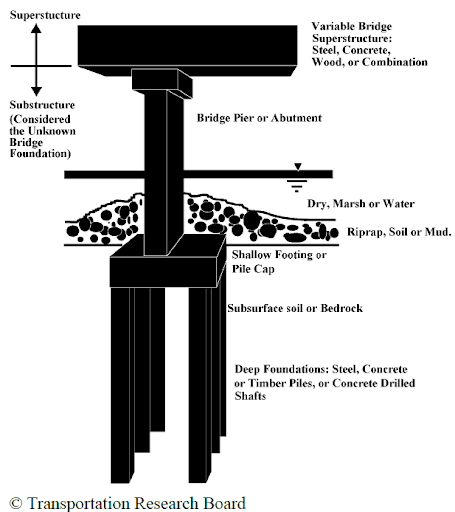
3.1 Foundation Type
- Massive open foundations anchored into rock
- Foundations socketed deep into competent rock strata
- Extensive rock anchoring and grouting
3.2 Geotechnical Investigations
- Core drilling
- Plate load tests
- Pressuremeter tests
- Seismic refraction surveys
- Rock mass classification (RMR, Q-system)
3.3 Stability Measures
- Rock bolting
- Consolidation grouting
- Drainage galleries to reduce uplift and pore pressure
- Slope stabilization using shotcrete + anchors
📌 Critical Insight:
Foundation design was governed not by bearing capacity alone, but by long-term slope stability and seismic resilience.
Seismic Considerations (Geotechnical)
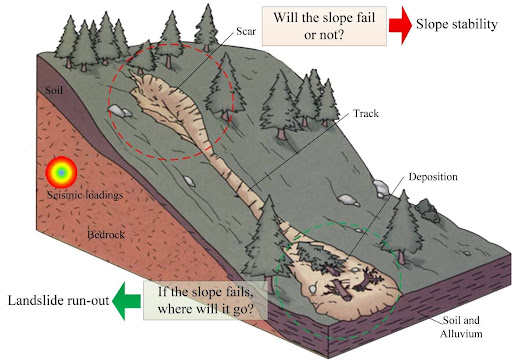
- Designed for Zone V earthquakes
- Pseudo-static and dynamic analyses performed
- Consideration of:
- Peak Ground Acceleration (PGA)
- Rock mass degradation during cyclic loading
- Differential foundation movement
➡️ Design Philosophy:
No collapse under maximum credible earthquake.
PART B — STRUCTURAL ENGINEERING ASPECTS
Structural System & Load Path
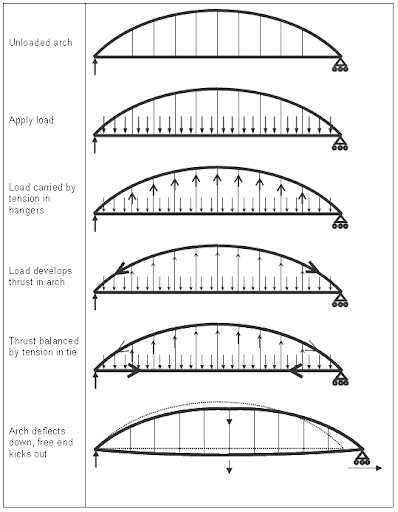

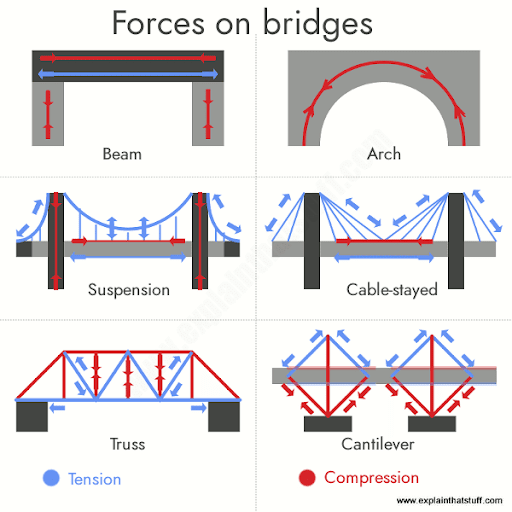
5.1 Bridge Type
- Steel arch bridge with deck supported by vertical hangers
- Arch primarily resists:
- Compressive forces
- Deck transfers load to:
- Hangers → Arch → Foundations
5.2 Why Arch?
- Ideal for deep gorges
- Minimizes number of foundations in river
- Efficient load transfer in compression
Steel Design & Material Engineering
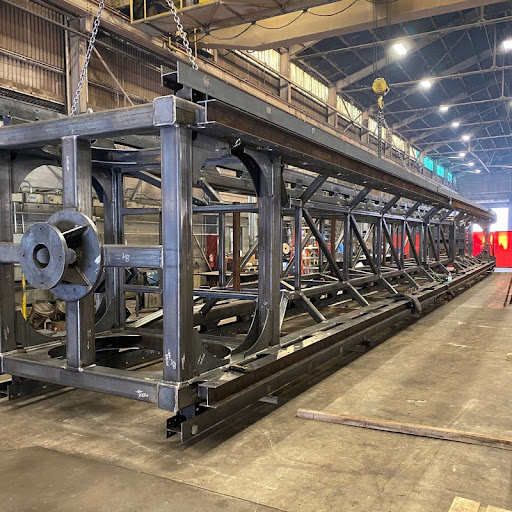
- High-strength structural steel (E350 / E410 grades)
- Special steel with:
- High toughness
- Low-temperature ductility
- Protection systems:
- Multi-layer anti-corrosion coating
- Designed for extreme temperature variation
📌 Design life: 120 years with minimal maintenance.
Wind Engineering & Aerodynamic Stability
7.1 Wind Challenges
- Valley funneling effects
- Gust speeds exceeding 260 km/h
- Risk of:
- Flutter
- Vortex shedding
- Galloping
7.2 Solutions
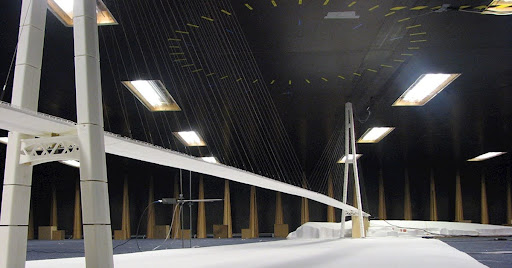
- Wind tunnel testing of scaled models
- Aerodynamically optimized deck cross-section
- Tuned mass dampers
- Temporary wind cables during erection
➡️ Chenab Bridge can safely operate even during cyclone-level winds.
Seismic Structural Design
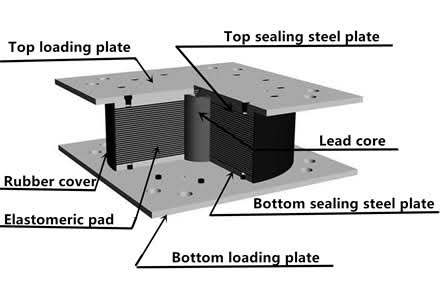
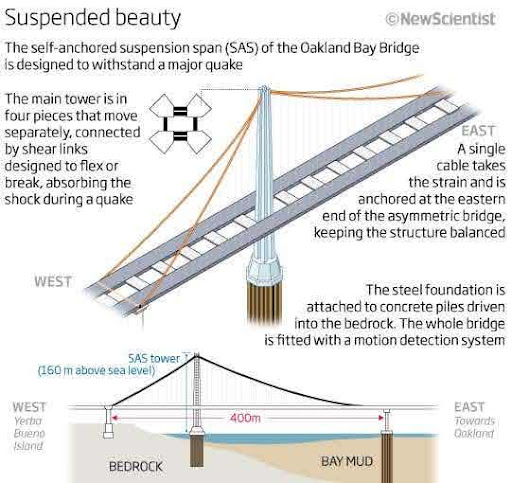
- Seismic isolation bearings used
- Energy dissipation through:
- Controlled flexibility
- Ductile detailing
- Nonlinear time-history analysis performed
📌 Key principle:
Controlled damage without collapse.
Construction Methodology (Engineering Feat)
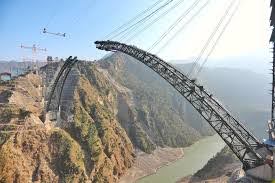
9.1 Arch Erection
- Cantilever construction from both banks
- Temporary cable crane system
- Closure segment placed with millimeter precision
9.2 Site Constraints
- No access from valley bottom
- Material transported via:
- Ropeways
- Helicopters
- Temporary access roads
Structural Health Monitoring (SHM)
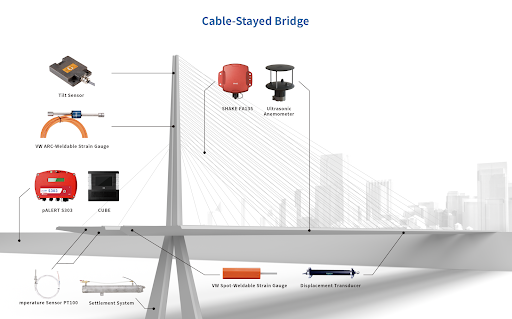
- Sensors installed for:
- Strain
- Temperature
- Displacement
- Wind speed
- Real-time monitoring
- Data-driven maintenance strategy
Integrated Geotechnical–Structural Interaction
| Aspect | Engineering Strategy |
| Weak rock | Deep socketed foundations |
| Seismic risk | Ductile + isolated design |
| Wind loads | Aerodynamic shaping |
| Temperature | Expansion joints + bearings |
| Long-term stability | SHM + corrosion protection |
Read More: IOCL Engineering Recruitment Through GATE
Integrating Data Science with Core Engineering Concepts in Civil, Mechanical, and Electrical Engineering
FAQs: Chenab Railway Bridge Technical Aspects
What makes the Chenab Railway Bridge a unique civil engineering project?
The Chenab Railway Bridge is the world’s highest railway bridge, designed in a seismic Zone V region with extreme wind and geological challenges. Its integration of geotechnical engineering and structural engineering sets a global benchmark.
What are the key geotechnical challenges in the Chenab Railway Bridge project?
The main challenges included fractured rock masses, fault zones, steep slopes, and high seismicity. Advanced rock mechanics, deep socketed foundations, and extensive grouting were critical to ensure long-term stability.
How was foundation design handled for the Chenab Railway Bridge?
The bridge uses massive open foundations anchored deep into competent rock. Foundation design was governed by slope stability, seismic resistance, and long-term performance, not just bearing capacity.
Why was a steel arch bridge chosen for the Chenab Railway Bridge?
A steel arch bridge is ideal for deep gorges as it efficiently transfers loads through compression while minimizing foundations in the river. This structural system is especially suitable for long-span bridge engineering in mountainous terrain.
How does the Chenab Railway Bridge handle seismic forces?
The bridge is designed for maximum credible earthquakes using seismic isolation bearings, ductile detailing, and nonlinear time-history analysis. The design philosophy ensures controlled damage without collapse.
What role does wind engineering play in the Chenab Railway Bridge design?
Due to valley funneling, wind speeds can exceed 260 km/h. Extensive wind tunnel testing, aerodynamic deck design, and tuned mass dampers ensure aerodynamic stability against flutter and vortex shedding.
How was construction carried out in such difficult Himalayan terrain?
The arch was erected using cantilever construction from both banks with cable crane systems. Materials were transported using ropeways, helicopters, and temporary access roads due to limited site accessibility.
What is the importance of structural health monitoring in the Chenab Railway Bridge?
A real-time Structural Health Monitoring (SHM) system tracks strain, displacement, wind, and temperature. This enables data-driven maintenance and supports the bridge’s 120-year design life.
Why is the Chenab Railway Bridge important for civil engineering students and GATE aspirants?
This project is a real-world civil engineering case study covering foundation engineering, seismic design, wind engineering, and steel structures, making it highly relevant for GATE Civil Engineering preparation.
Conclusion
The Chenab Railway Bridge is not just a bridge; it is a masterclass in integrated civil engineering design.
- Geotechnical engineering ensured stability in one of the world’s most complex geological terrains.
- Structural engineering delivered resilience against extreme loads, including seismic, wind, thermal, and operational loads.
- The project sets a global benchmark for long-span railway bridges in mountainous and seismic regions.
For civil engineering students and professionals, this bridge exemplifies:
- Site-specific design
- Multidisciplinary integration
- Performance-based engineering

Tags